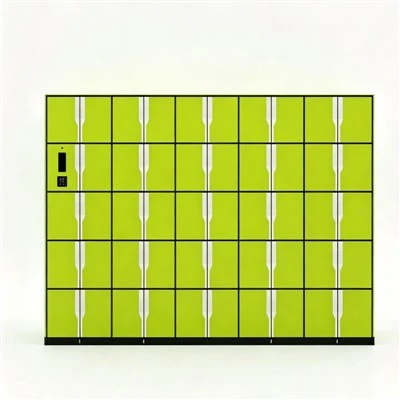
If you’ve ever stood in a workshop, manufacturing floor, or even a busy home garage staring at an empty slot where a socket wrench, torque screwdriver, or specialized measuring tool should be—wasting 10 minutes (or more) digging through boxes, asking coworkers, or retracing your steps from the last job—you’ve experienced the same headache that led my team to build our line of smart storage solutions. For years, I heard the same question from shop foremen, lab managers, and maintenance supervisors: Can a smart tool cabinet actually track tools? The short answer is yes—but it’s not just about slapping a digital screen on a metal cabinet. It’s about building a system that works as hard as the people using it, and solves real problems that outdated lockers, pegboards, or basic key card access can’t.
Let’s start with the core of how tool tracking works, because that’s the part most consumer-focused “smart” cabinets get wrong. At its simplest, tracking a tool means verifying that every item that goes into the cabinet stays there, and every item that’s removed is accounted for, in real time. But for high-traffic spaces—think an aerospace shop with 50 technicians using 100+ specialty torque tools, or a research lab with delicate calibrated instruments—this can’t rely on manual checks or even basic barcode scanners. A dropped barcode sticker can fall off; a technician might forget to scan a tool before grabbing it for a job. That’s why we designed our system around RFID (Radio Frequency Identification) technology, which is far more reliable for frequent use and large volumes. If you’ve ever tapped a contactless card to open a door or paid for groceries with a tap-to-pay phone, you’ve used RFID: tiny tags, the size of a grain of rice or a sticky label, that store unique digital identifiers, and readers that pick up signals from those tags without needing line of sight.
When a tool is fitted with a passive RFID tag (no battery required, so it doesn’t need replacing for years) and placed in our Smart Tool Cabinet, the system’s array of readers continuously monitors the cabinet’s interior. Every time a tool is removed or returned, the reader detects the tag’s unique ID, logs the exact time, who accessed it (via a user ID or biometric scan), and even the cabinet section it came from. This isn’t just a vague “something was moved” alert: it’s a specific log that says, at 9:17 a.m., Jane Doe took the 10mm combination wrench from drawer 3, slot 7, and it hasn’t been returned as of 1:45 p.m. That level of granularity is game-changing for anyone who’s ever dealt with tools going missing, and struggling to prove when or where.
Of course, RFID alone isn’t enough to make a smart tool cabinet truly useful. A common misconception is that any RFID-enabled cabinet is a smart tracking system—but that’s like calling a flip phone a smartphone. The magic is in how the data is processed and shared. Our cabinet syncs with a cloud-based dashboard that works on phones, tablets, or desktop computers, so a shop manager can check the tool inventory from a meeting, before a shift starts, or even at home. For example, if a team has a critical assembly job starting at 8 a.m., the dashboard can show if all required specialized tools (like digital calipers, torque wrenches, or safety goggles) are already in the cabinet, or if any are out with technicians. No more rushing to track down a missing dial indicator 10 minutes before a deadline.


This level of tracking also solves a problem that’s rarely talked about: tool maintenance. Many industries require tools to be calibrated, serviced, or replaced on a regular schedule (especially lab equipment or precision tools used in medical or aerospace work). Our system doesn’t just track location—it tracks how often a tool is used, when it was last returned, and can send automatic alerts when a calibration date is approaching. For managers, that means no more using a spreadsheet to track 100+ tools, manually inputting service dates and crossing fingers they don’t miss a deadline that could lead to a failed audit or a defective product. For reference, our Smart Tool Cabinet is built with this exact functionality, tailored for both general workshop use and specialized needs like research labs. If you’re looking for a solution for precision lab tools, our Smart Lab Equipment Storage Cabinet with RFID is designed to handle even delicate, high-value instruments with additional security and calibration tracking features.
I’ve seen firsthand how this works in real environments, not just in our test lab. Last year, a maintenance team at a regional power company reached out to us after months of struggling with lost tools on their line crew. Their old system relied on technicians checking out tools with paper logs, and in the course of a year, they lost 12 specialty multimeters and 8 torque wrenches—costing them over $15,000 in replacements alone, plus the time spent tracking missing tools during emergency repairs. They adopted our smart tool cabinets for their three regional shops, and within six months, their tool loss rate dropped to less than 1%—and the time spent tracking missing tools fell from an average of 4 hours a week per shop to less than 30 minutes. That’s not just a small efficiency gain; that’s money that goes back to their bottom line, and reliability for the customers they serve.
But let’s be clear: smart tool tracking isn’t for every space. If you’re a hobbyist with a small garage, a $500 smart cabinet might be overkill next to a $20 pegboard. But for any space with high tool volume, high tool value, or strict compliance requirements (manufacturing, healthcare, research, construction), the cost of a missing tool isn’t just the replacement cost—it’s the cost of delayed projects, audit failures, or even safety risks. A technician using an uncalibrated torque wrench could lead to a part failure; a missing tool from a lab could compromise a months-long research study. That’s where smart tracking steps in.
Another common question we get: can these cabinets be customized for different tools? The answer is yes, absolutely. We’ve worked with clients to adjust our system to track everything from small screwdrivers to large power tools, and even consignment tools for shared workspaces. The RFID tags can be applied to any tool, and the cabinet’s internal layouts can be adjusted to fit whatever tools your team uses. For example, a woodworking shop might want large drawers for saw blades and sanders, while a research lab needs smaller, locked slots for glass pipettes and sensitive sensors—both can work with our system, including the Smart Lab Equipment Storage Cabinet with RFID, which has additional lockout functionality for high-value, regulated items.
Security is another piece of the puzzle that makes tracking work. Our smart cabinets can be set to require user authentication (pin codes, key cards, or biometrics) for access, so you don’t have to worry about unauthorized personnel taking tools. If a tool is removed without the proper authentication, the system sends an immediate alert to managers, which is critical for spaces where tools could be stolen or misused. That’s a layer of protection that traditional cabinets can’t offer—because a lock is only as good as the person holding the key.
So, going back to the original question: Can a smart tool cabinet track tools? The answer is a resounding yes, when it’s built with the right technology and designed for real-world use. It’s not about flashy screens or overcomplicated features—it’s about solving the pain points that every tool user and manager deals with: lost tools, wasted time, missed maintenance deadlines, and compliance headaches.
If you’re ready to stop wasting time chasing down missing tools and start enjoying the efficiency and peace of mind that comes with smart tracking, we’re here to help. Our team has worked with workshops, labs, manufacturing facilities, and more to find the right smart storage solution for every need. Whether you’re looking for a general-purpose Smart Tool Cabinet or a specialized storage system for delicate lab equipment, we can walk you through how our technology works, answer your questions, and help you find a solution that fits your space and budget. Reach out to our team to discuss your needs and learn how smart tool tracking can transform your operations.
References
- International Society of Automation. (2022). RFID Technology for Asset Tracking in Industrial Environments. ISA Publications.
- U.S. Occupational Safety and Health Administration (OSHA). (2021). Tool Management and Loss Prevention in Manufacturing Facilities. OSHA Technical Manual.
- Journal of Laboratory Automation. (2020). Smart Storage Solutions for Regulated Research Laboratories. SAGE Journals.
- Global Industry Analysts. (2023). Smart Tool Cabinet Market: Growth Trends and End-User Applications. GIA Market Research Report.
- National Institute of Standards and Technology (NIST). (2022). Calibration Tracking for Precision Measurement Tools in Industrial Settings. NIST Special Publication.