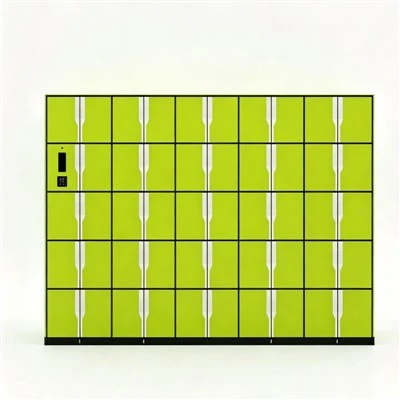
As a supplier of Smart Tool Cabinets, I often get asked about the energy consumption of these innovative storage solutions. In this blog, I'll delve into the factors that influence the energy use of a smart tool cabinet, provide some estimates, and discuss how energy efficiency can be optimized.
Understanding the Components of a Smart Tool Cabinet
A Smart Tool Cabinet Smart Tool Cabinet is not just an ordinary storage unit. It is equipped with various technologies to enhance its functionality, and each of these components contributes to its energy consumption.
- Power Supply: Most smart tool cabinets are powered by a standard electrical outlet. The power supply unit converts the incoming AC power to the appropriate DC voltages required by the cabinet's internal components. Its energy consumption depends on its efficiency and the power requirements of the cabinet.
- Lighting: Many smart tool cabinets feature built - in lighting systems to provide better visibility. LED lights are commonly used due to their energy efficiency. They consume much less power compared to traditional incandescent or fluorescent lights. However, the total energy used for lighting depends on the number of lights, their wattage, and the duration of operation.
- Locking Mechanisms: Smart tool cabinets often have electronic locking systems for security. These locks may be powered by solenoids or motors, which draw energy when the cabinet is opened or closed. The frequency of use of the locking mechanism will affect the overall energy consumption related to it.
- Smart Monitoring Systems: One of the key features of a smart tool cabinet is its ability to monitor the tools stored inside. This is usually achieved through a combination of sensors, such as RFID (Radio - Frequency Identification) readers in the Smart Lab Equipment Storage Cabinet with RFID. These sensors constantly need to be powered to detect the presence or absence of tools and communicate the data to the cabinet's control system.
Estimating the Energy Consumption
Estimating the exact energy consumption of a smart tool cabinet can be challenging as it varies depending on the model, features, and usage patterns. However, we can make some general estimates based on the typical power ratings of the components.
Let's assume a relatively standard smart tool cabinet:
- The power supply unit has an efficiency of around 80 - 90%. If the total power requirements of the cabinet's components are, say, 50 watts, the power supply will draw approximately 50 / 0.8 = 62.5 watts from the electrical outlet.
- For the lighting system, if there are four LED lights with a wattage of 5 watts each, the total lighting power is 20 watts. If the lights are on for an average of 2 hours per day, the daily energy consumption for lighting is 20 watts * 2 hours = 40 watt - hours.
- The locking mechanism might draw a small amount of power, say 5 watts, but it is only in operation for a few seconds each time the cabinet is opened or closed. If the cabinet is opened and closed 10 times a day, and each operation takes 5 seconds, the total time of operation per day is 5 seconds * 10 = 50 seconds. Converting this to hours (50 seconds / 3600 seconds per hour ≈ 0.014 hours), the energy consumption for the locking mechanism is 5 watts * 0.014 hours ≈ 0.07 watt - hours per day.
- The smart monitoring system, including RFID readers and other sensors, could consume around 10 watts continuously. So, its daily energy consumption is 10 watts * 24 hours = 240 watt - hours.
Adding up these estimates, the total daily energy consumption of this smart tool cabinet is approximately 40 + 0.07+240 = 280.07 watt - hours. In a month (assuming 30 days), it would be 280.07 watt - hours * 30 = 8402.1 watt - hours or 8.4021 kilowatt - hours.
Factors Affecting Energy Consumption
- Usage Frequency: The more frequently the cabinet is used, the higher the energy consumption. For example, if a smart tool cabinet in a busy workshop is opened and closed dozens of times a day and the lights are often on, its energy use will be significantly higher than a cabinet in a less - used area.
- Component Quality: Higher - quality components, especially the power supply and lighting systems, tend to be more energy - efficient. A well - designed power supply can convert AC to DC with less energy loss, while high - grade LED lights consume less power while providing optimal illumination.
- Software Optimization: The software that controls the smart tool cabinet can also impact energy consumption. An optimized software program can put the cabinet's components into a low - power mode when they are not in use, reducing overall energy consumption.
Optimizing Energy Efficiency
- Use Energy - Efficient Components: As mentioned earlier, choosing high - quality, energy - efficient components such as LED lights and efficient power supplies can significantly reduce energy consumption.
- Implement Power - Saving Modes: The cabinet's software should be designed to have power - saving modes. For example, the lighting can be set to turn off automatically after a certain period of inactivity, and the smart monitoring system can reduce its polling frequency during off - peak hours.
- Proper Maintenance: Regular maintenance of the cabinet, including checking for loose connections and ensuring that all components are functioning properly, can also help in maintaining energy efficiency. A malfunctioning component may draw more power than necessary.
Conclusion
In conclusion, the energy consumption of a smart tool cabinet depends on a variety of factors, including the components it uses, its usage patterns, and the quality of its design and software. While it does consume energy, with proper selection of components, optimization of software, and regular maintenance, the energy consumption can be kept at a reasonable level.
If you are interested in learning more about our Smart Tool Cabinets or are considering a purchase, we would be more than happy to discuss your specific needs. Contact us to start a procurement discussion, and we'll work with you to find the best solution for your tool storage requirements.


References
- General knowledge of electrical engineering and smart home technology.
- Industry reports on energy consumption of electronic storage devices.