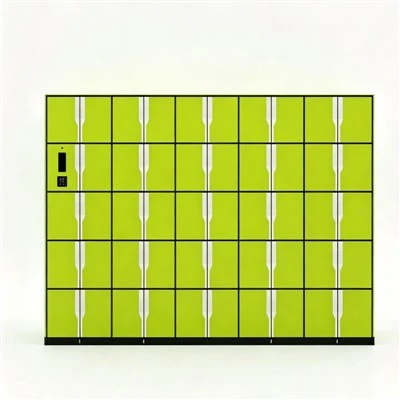
If you’ve ever worked in a lab, you know the chaos of misbuzzed glassware, missing pipettes, or forgetting when a centrifuge was last calibrated. That’s why our team built the Smart Lab Equipment Storage Cabinet with RFID—because losing or misplacing gear wastes so much time (and money) that no one should deal with it. Over the years, I’ve gotten tons of questions from lab managers, grad students, and techs alike: Wait, what actually fits in this thing? So I’m breaking it down, no jargon, no marketing fluff, just real stuff that works in our Smart Lab Equipment Storage Cabinet with RFID (and why RFID makes it all way simpler than a regular tool or storage cabinet).
First, let’s keep it real: RFID isn’t just a fancy toy for tracking stuff. For labs, it’s a game-changer because every piece of gear gets a tiny, cheap tag that the cabinet reads instantly—no scanning barcodes one by one, no guessing if something’s actually inside. We’ve tested this with all kinds of lab gear, from tiny, high-use items to bulky, big-ticket ones, and it works across the board. That said, not every lab supply fits, so let’s split this into categories that make sense for actual lab work, not just a random list.
Let’s start with the small, high-stakes stuff—this is the stuff that goes missing the most, and it’s a pain to replace fast. I’m talking micropipettes, the little plastic pipette tips (wait, not just any—wait, let’s clarify: micropipettes themselves, not the loose tips, though we do have ways to store those too). Micropipettes are like the backbone of a molecular biology lab—they’re used for every assay, every sample prep, and if one goes missing, you’re stuck waiting for a delivery that might take days. The RFID cabinet works perfectly here because each micropipette has a tag, and when you take one out, the system logs who grabbed it, when, and that it’s now “out.” Same with things like single-channel and multi-channel pipettes—we’ve got adjustable slots that fit all common brands (Eppendorf, Gilson, Rainin) and the RFID reads them even if they’re hanging or stacked a little. Oh, and don’t forget about the pipette tip boxes—we’ve got dedicated, locked compartments for those too, because spillover tips or grabbing the wrong size is a huge waste. The cabinet can track how many tips are left in each box, so you get an alert when it’s time to reorder before you run out mid-experiment.
Next, medium-sized tools that don’t get the same hype but break all the time or need regular calibration. Think things like vortex mixers, mini centrifuges, pH meters, and balance scales. A lot of labs keep these on benches, so they get moved around, knocked off, or not calibrated on schedule. Our RFID cabinet stores these easily—we have adjustable shelves and padded holders so nothing gets scuffed. The best part? You can set the RFID system to alert you when a piece needs calibration. For example, if a pH meter is tagged with its last calibration date, the cabinet will flag it when it’s due, so you don’t have to track that in a messy spreadsheet. We’ve had a grad student tell us this cut her calibration reminders time by 80%—game over, right? Also, things like small heat blocks (the ones for PCR tubes) fit perfectly here, no problem. I will say this: we don’t store loose reagents in the cabinet—things like liquid chemicals or un-sealed reagents need climate control, which our standard cabinet doesn’t have, so we always tell labs to use our companion climate units for that. No sense risking a broken centrifuge because you stored a leaky tube next to it.
Now, the big stuff—wait, but not the huge lab equipment like fume hoods or HPLCs. We’re talking about portable, bulky gear that’s easy to misplace and expensive to replace. Like portable centrifuges, ultrasonic cleaners, lab scales (the larger benchtop ones), and even small refrigerators for samples? Wait, no, small sample fridges are a different size, but things like portable water baths fit great. A lot of mid-sized labs have these scattered—one centrifuge in the cell culture room, one in the molecular lab, and no one knows where they are when you need them for a big experiment. Our RFID cabinet has deep, reinforced shelves that can hold up to 50 lbs each, so no worrying about a portable centrifuge tipping over. The RFID system tracks exactly when these big items are checked out, so if someone takes a centrifuge to another building and forgets to log it, you can pull up the cabinet’s log and find it fast. We’ve also worked with biotech startups that have a mix of bench space and shared equipment—this cabinet lets them store all their portable big gear in one place, so no more hunting for that $2k centrifuge at 8 PM before a deadline.


Wait, what about the stuff that’s not “lab equipment” but still gets used all the time in labs? Like lab coats, safety goggles, nitrile gloves, and even fume hood gloves or fire extinguishers? Yeah, those fit too. A lot of labs keep safety gear in random closets or under benches, so you’re stuck grabbing a lint-covered lab coat mid-experiment because the clean ones are missing. Our RFID cabinet has lockable, adjustable hooks for lab coats and goggles, and even slots for glove boxes. You can set it so that only authorized people (like lab members) can take personal safety gear, so no one’s stealing extra goggles for a home project. We even had a hospital lab use our cabinet for fire extinguishers and spill kits—since those are required to be accessible, the RFID logs prove who accessed them when, which is a huge help for OSHA inspections. No more scrambling to find a spill kit when a chemical spills on the bench, and no more guessing if the fire extinguisher was checked last month.
But here’s the thing: the Smart Lab Equipment Storage Cabinet with RFID isn’t one-size-fits-all. We’ve had labs come in with weird, custom gear—like a custom-built microfluidic chip holder or a large incubator for cell cultures—and we work with them to adjust the cabinet’s slots or shelves to fit. The RFID technology is flexible, so even if an item has a non-standard size, as long as you can stick a tiny RFID tag on it, it works. We also make sure to distinguish this from regular smart tool cabinets—like, if you’re a mechanic needing to store wrenches and sockets, check out the Smart Tool Cabinet, but this one is purpose-built for lab gear, with higher weight limits, more precise tracking for small tools, and safety features that matter for labs (like lockouts for hazardous tool access).
Now, let’s get real about what doesn’t fit, because I don’t want anyone buying this cabinet and being disappointed. First, bulk, unsealed reagents—like open bottles of ethanol, liquid nitrogen (obviously, that’s a whole other thing), or un-sealed chemical stock solutions. Those need climate-controlled storage, so our standard cabinet won’t work. Second, huge, stationary lab equipment—like HPLC systems, fume hoods, or large incubators. Those are too big and not portable, so they don’t make sense in this cabinet. Third, loose, tiny items that don’t have a place—like individual screws or tiny washers (unless you get custom small drawers, which we offer, but most labs don’t need that). And finally, items that aren’t compatible with RFID tags—though these days, almost every lab gear manufacturer makes RFID-compatible tags, or we can add a tag to any item for like a dollar each.
Over the past few years, we’ve talked to over 100 labs that use these cabinets, and the feedback is consistent: the biggest wins are no more lost micropipettes, automated calibration reminders, and easier safety compliance. A high school chemistry lab told us they cut their annual lab supply budget by 15% because they stopped replacing missing pipettes and goggles. A biotech lab said they reduced their experiment delays by 20% because they could find their portable centrifuge in 2 minutes instead of 20. That’s the stuff that matters—this isn’t just a fancy storage cabinet, it’s a tool that makes labs run smoother.
If you’re a lab manager, tech lead, or even a grad student who’s tired of hunting for gear, this is worth checking out. We’ve customized cabinets for everything from high school teaching labs to GMP-certified biotech facilities, so whatever your lab size or needs, we can adjust the setup. To talk through your specific gear needs, ask about custom slot sizes, or get a demo of how the RFID tracking works, just reach out to our team. We’re here to help, no sales pressure, just real answers for real lab problems.
References
- National Institute of Standards and Technology. (2022). RFID Technology for Laboratory Asset Tracking. NIST Special Publication 1800-35.
- Laboratory Safety Institute. (2021). Best Practices for Lab Equipment Storage and Asset Management. LSI Guidelines for Clinical and Research Labs.
- Gilson, Inc. (2023). Micropipette Storage Solutions for High-Throughput Lab Environments. Technical Brief #47.
- Occupational Safety and Health Administration. (2022). Laboratory Safety Guidelines for Portable Equipment and Personal Protective Gear. OSHA Publication 3501-10R.