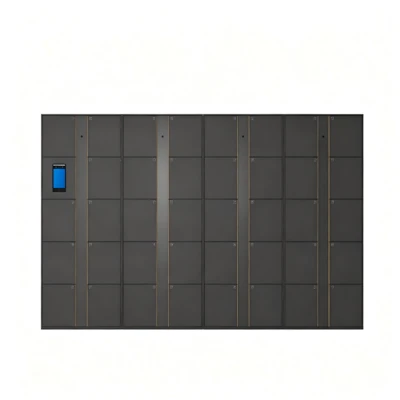
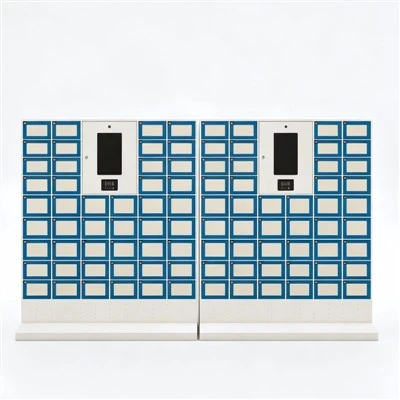
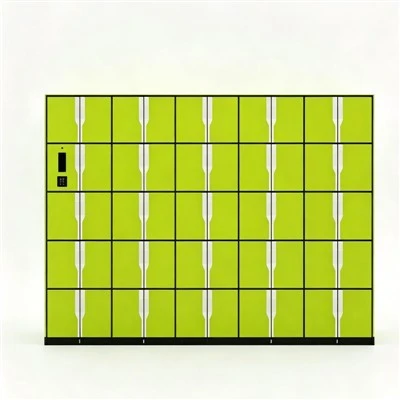
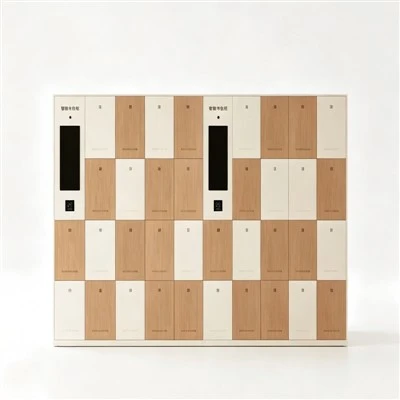
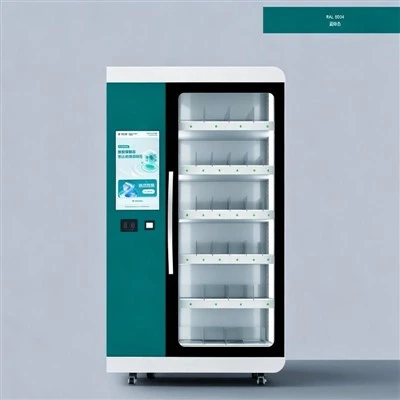
Smart hospital shoe changing lockers are an important component of modern intelligent hospital logistics systems. Their manufacturing process directly determines product safety, durability, and operational stability. Due to the specialized hospital environment, which requires high standards of hygiene, corrosion resistance, and intelligent functionality, the production process typically adopts a combination of standardized, precision-based, and modular manufacturing techniques to ensure long-term and high-frequency usage performance.
The initial stage of production involves structural design and material selection. The cabinet body is generally made of high-quality cold-rolled steel or stainless steel. Computer-aided design is used to optimize structural strength and spatial layout, improving load-bearing capacity and service life. Before production, all materials undergo strict inspection to ensure corrosion resistance, rust prevention, and environmental compliance.
In the sheet metal processing stage, laser cutting, CNC punching, and bending forming techniques are used to achieve high-precision fabrication. These processes ensure dimensional consistency and structural stability of all components. Afterward, welding is applied to firmly join structural parts, and all weld points are polished to achieve a smooth and uniform appearance.
Surface treatment is a critical part of the manufacturing process. The cabinet undergoes degreasing, rust removal, and phosphating pretreatment before electrostatic powder coating is applied. This creates an even protective layer that enhances corrosion resistance and wear durability while meeting the cleanliness requirements of hospital environments.
During the electronic system integration stage, smart control modules, identity authentication devices, and electronic locking systems are assembled and tested. This process ensures stable operation of all electronic components and seamless integration with backend management platforms to support identity verification, access control, and usage tracking functions.
After full assembly, comprehensive quality testing is conducted, including structural strength testing, electronic functionality testing, network stability testing, and safety performance evaluation. These procedures ensure reliability and stability in real-world operating conditions.
Overall, the manufacturing process of smart hospital shoe changing lockers combines precision engineering with intelligent electronic technology. Through standardized procedures and strict quality control, the system achieves a balance of structural stability, functional completeness, and operational safety, providing a solid hardware foundation for modern smart hospital logistics management.